
How Carriers and Distributors Can Scale Insurance Operations Without Sacrificing Service
A Q&A WITH ROB PASQUALINI
When insurance organizations grow, operational pressure tends to grow with them. More business means more applications, more contracting activity, more follow-up, and more administrative work. At some point, internal teams can find themselves spending more time processing the business than helping generate it.
For Robert Pasqualini, Director of Business Development at Employee Pooling, that’s one of the biggest operational challenges he sees across carriers, BGAs, and distributors. Rob joined Employee Pooling in 2021 and has worked across underwriting support, case management, business development, and the company’s calling team, giving him a close view of how operational decisions affect the people responsible for growing and servicing the business.
We sat down with Rob to talk about staffing, service, and why the right operational model can help insurance organizations grow without putting additional strain on their teams.
Q: As distributors and carriers continue to face staffing shortages and increasing workloads, what operational challenges are you seeing most often?
Rob: One of the biggest challenges I see is that carriers and BGAs begin to sacrifice service to their downlines because their internal teams are increasingly focused on administrative work.
It usually starts gradually. Volume increases, the team absorbs it, and everyone works harder to keep up. But eventually, they reach a point where they’re essentially treading water just to process incoming work. That’s when turnaround times begin to slip.
Longer processing times lead to higher case cycle times. For distributors and BGAs, that can have a direct impact on the advisor experience. Advisors want timely answers and movement on their business. When they consistently experience delays, they may begin looking for firms that can provide a higher standard of service.
The issue isn’t simply that the team is busy. It’s that the wrong work is consuming too much of their capacity.
Q: Employee Pooling talks about “rightsourcing” instead of outsourcing. What’s the difference, and why does that distinction matter?
Rob: Rightsourcing is about looking at the work your organization needs to accomplish and determining where each responsibility can be handled most effectively.
There are administrative tasks that are essential to keeping the business running, but they don’t necessarily need to be performed by your highest-value internal employees.
Rightsourcing allows companies to move those lower-stakes administrative responsibilities to a specialized partner while allowing internal employees to focus on the work that drives growth.
For a BGA, that could mean giving internal staff more time to build relationships, recruit advisors, support sales activity, and help producers succeed rather than spending that time entering data or managing administrative processes.
It’s about making sure your most valuable internal resources are spending their time where they can have the greatest impact.
See how rightsourcing can help BGAs focus internal resources on growth.
Q: Many firms hesitate to bring in outside operational support because they’re concerned about losing control or consistency. What would you tell those leaders?
Rob: That’s a very common concern, and it’s understandable. Your operations are your business, so you don’t want to hand them over and lose visibility into what’s happening.
That’s not how we approach our relationships.
Our teams stay in constant communication with the client’s staff to make sure expectations are clear, and performance stays on track. The client maintains ownership of the process while the EP team becomes an extension of that department.
That integration can take many forms. Our teams participate in internal meetings, use the client’s communication tools, and maintain regular check-ins to review performance and discuss process changes.
The goal is for the EP team to feel like part of the organization rather than a separate vendor sitting outside of it.
That ongoing communication also makes it easier to identify opportunities to improve the process as the client’s needs evolve.
Q: In your experience, how does strong operational support impact the advisor experience, even when advisors never interact directly with the back office?
Rob: Advisors may never know who processed their case, but they absolutely notice what happens as a result.
When business is processed promptly and advisors receive timely updates, they have greater confidence in the organization supporting them. Strong operational support also gives internal BGA staff more time to be present in the advisor’s day-to-day workflow.
That’s important because those conversations shouldn’t always be about chasing requirements or checking the status of a case. Internal teams should have the capacity to help advisors sell, identify opportunities, strengthen relationships, and grow their business.
When administrative work takes over that time, you’re taking people away from the activities that create revenue.
Better operations give them that time back.
See our case study that demonstrates how reducing case cycle times can improve BGA operations.
Q: Looking ahead, what do you think will separate the organizations that thrive operationally from those that continue to struggle?
Rob: The organizations that thrive will be the ones that think differently about where their people spend their time.
They’ll keep their internal staff focused on revenue-generating work, relationship management, and activities where their experience creates the most value. They’ll use technology and specialized operational partners to handle the administrative work that supports those activities.
That requires a different approach to staffing. Instead of trying to build every capability internally, organizations can create a broader operating model that combines their internal expertise with outside resources where it makes sense. Read more about why staffing should be treated as infrastructure.
That’s what rightsourcing is really about.
It’s making sure the right people are doing the right work so the organization can continue to grow without sacrificing service.
The Real Value of Operational Capacity
For Rob, the conversation about staffing ultimately comes back to one question: What could your team accomplish if they weren’t spending so much time keeping up?
Insurance and annuity organizations will always have administrative work that needs to get done. The difference is how they choose to handle it.
Employee Pooling provides insurance-trained professionals who work as an extension of client teams, giving carriers and distributors additional operational capacity without requiring every increase in workload to become a permanent internal hiring decision. EP’s current service model spans functions including case management, application processing, licensing and contracting, commissions, policy services, underwriting support, and special projects.
The objective isn’t simply to process more work. It’s to give internal teams the capacity to spend more time on the work that grows the business and strengthens the relationships that sustain it.
That’s the opportunity behind rightsourcing.
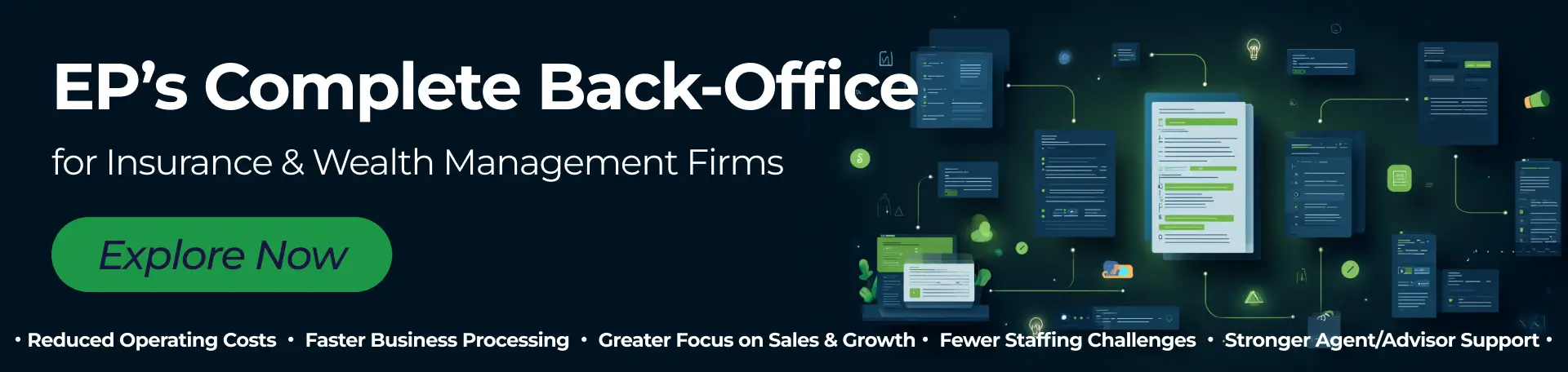
Learn more about our Complete Back Office support for BGAs or our Carrier Services for small to mid-sized carriers.
Have an operational challenge that’s putting pressure on your team? Talk with Employee Pooling about the right mix of internal and external support for your organization.